

ERA Technology:
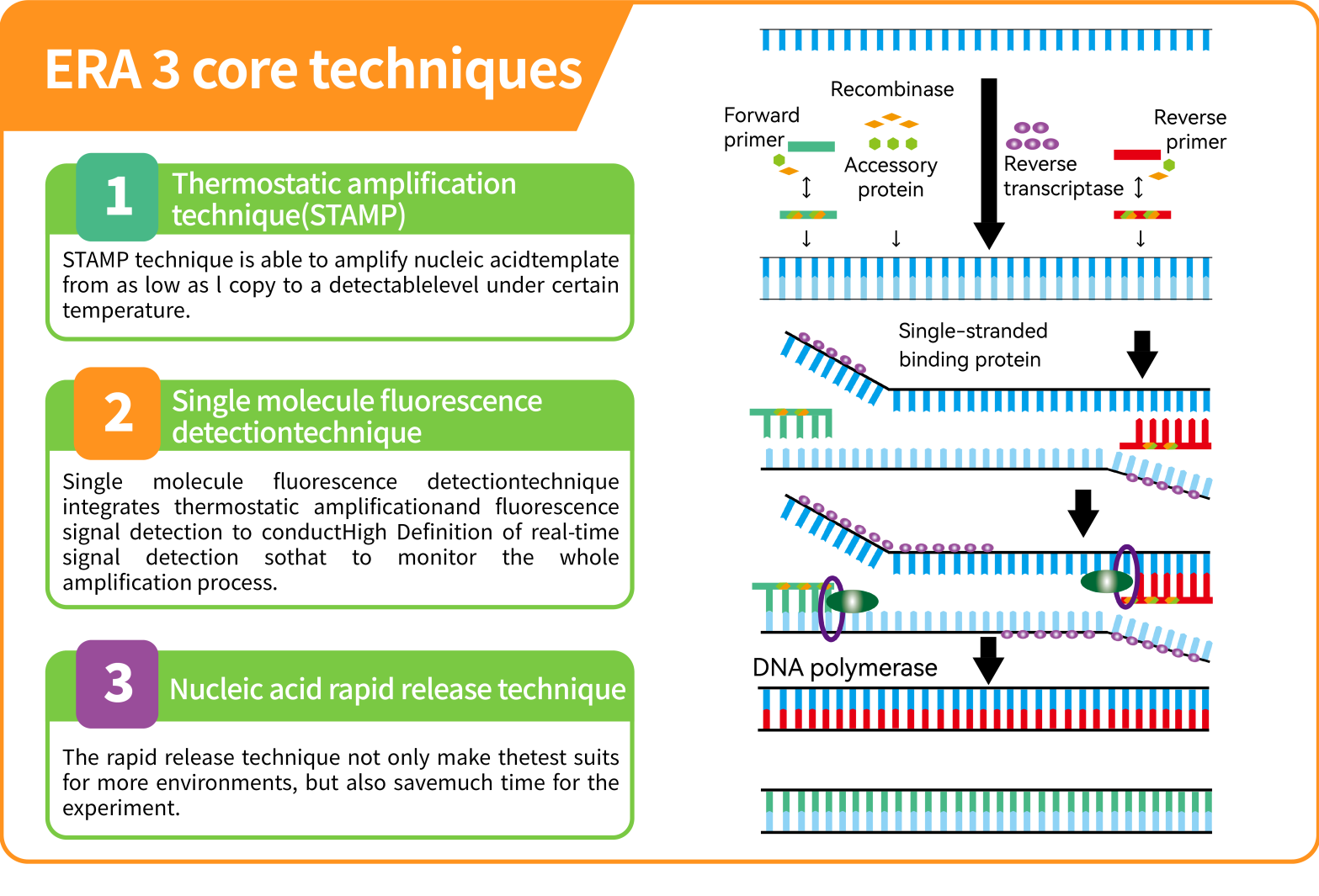
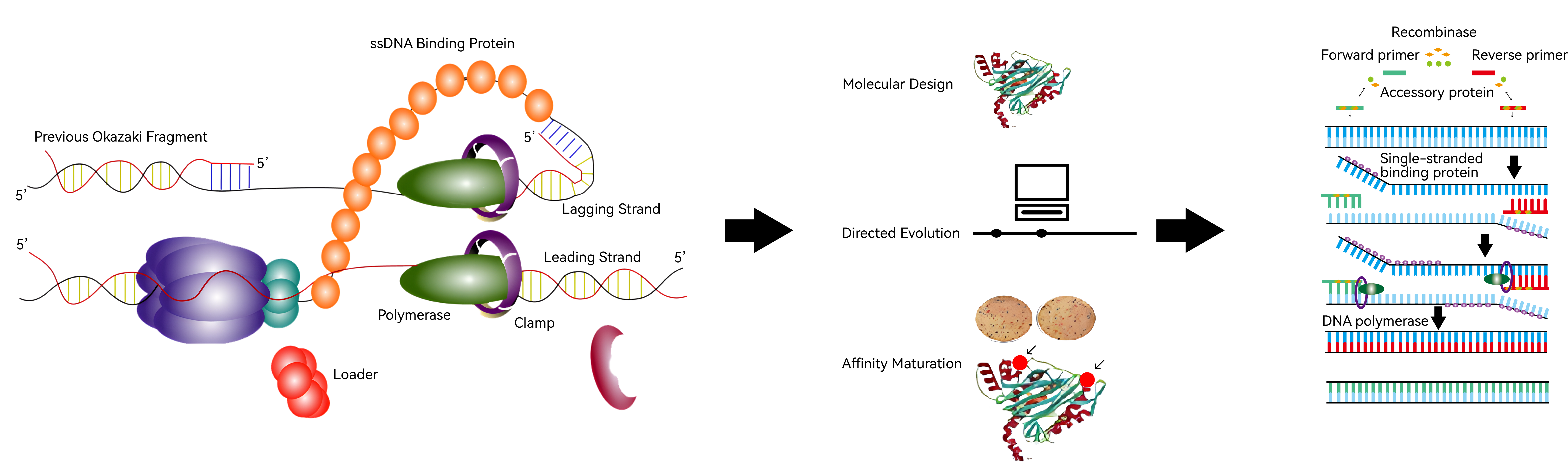
Enzymatic Rapid Amplification (ERA ) Technology is a new type of innovative and novel qpcr technologyg, which is lobal leading and independent intellectual property isothermal nucleic acid amplification technology developed by R&D team of Suzhou GenDx. ERA uses advanced Molecular Design, Directed Evolution, Affinity Mathematics and other technical means in the field of antibody pharmacy to transform and mutate specific enzymes from bacteria, viruses and bacteriophages. Following that, screening of functional mutants and optimizing of the combinations are conducted. The core recombination isothermal amplification system was obtained. The method was applied for Chinese patents and international patents (Application No.: 201910262085.3; PCT201910262085.3). The method can specifically amplify trace target DNA fragments at low temperature (25-42℃). At the optimal temperature of 37-45℃, the amplification process only takes 5-20 minutes. Its low temperature adaptability and sensitivity have made significant breakthroughs and reached the international advanced level.
Highlights:
ERA offers a fast, accurate, and accessible solution for biological nucleic acid testing.
Comparison of techniques:
Method | Traditional PCR | q-PCR | LAMP | ERA |
Reaction Temperature | 95~55℃ | 95~55℃ | 65℃ | 37~45℃ |
Reaction Time | 4h | 2h | 45~60 minutes | 5~20 minutes |
Sensitivity | Moderate | High | High | High |
Operation | Complex, professionals needed | Relatively complex, professionals needed | Simple | Simple, without professionals |
Accuracy | Easily polluted by aerosol | High | Frequently false positives | High |
Cost | Moderate PCR cycler, electrophoresis instrument, gel imager | Gighest Real-time PCR cycler | High Constant temperature fluorometer | Moderate GENEYE® |